
Titleist Pro V1 or Callaway Chrome Soft: which suits you?
Torn between the Titleist Pro V1 and the Callaway Chrome Soft? Both are premium golf balls, but they suit different player profiles. In the OneGolfBall model the Pro V1 offers a touch more distance and spin, while the Chrome Soft has less total driver spin, a little more roll-out and a lower compression. The differences are not always big, but they can decide which ball fits your game best.
How big is the distance difference off the driver?
The model compares both golf balls at driver swing speeds of 81, 96 and 112 mph. The Pro V1 carries further in all three, though the gap is small. At 81 mph it is 0.1 yards. At 96 and 112 mph the advantage grows to 2.0 and 1.9 yards respectively.
| Golf ball | Per ball | Per box | 81 mph | 96 mph | 112 mph | |
|---|---|---|---|---|---|---|
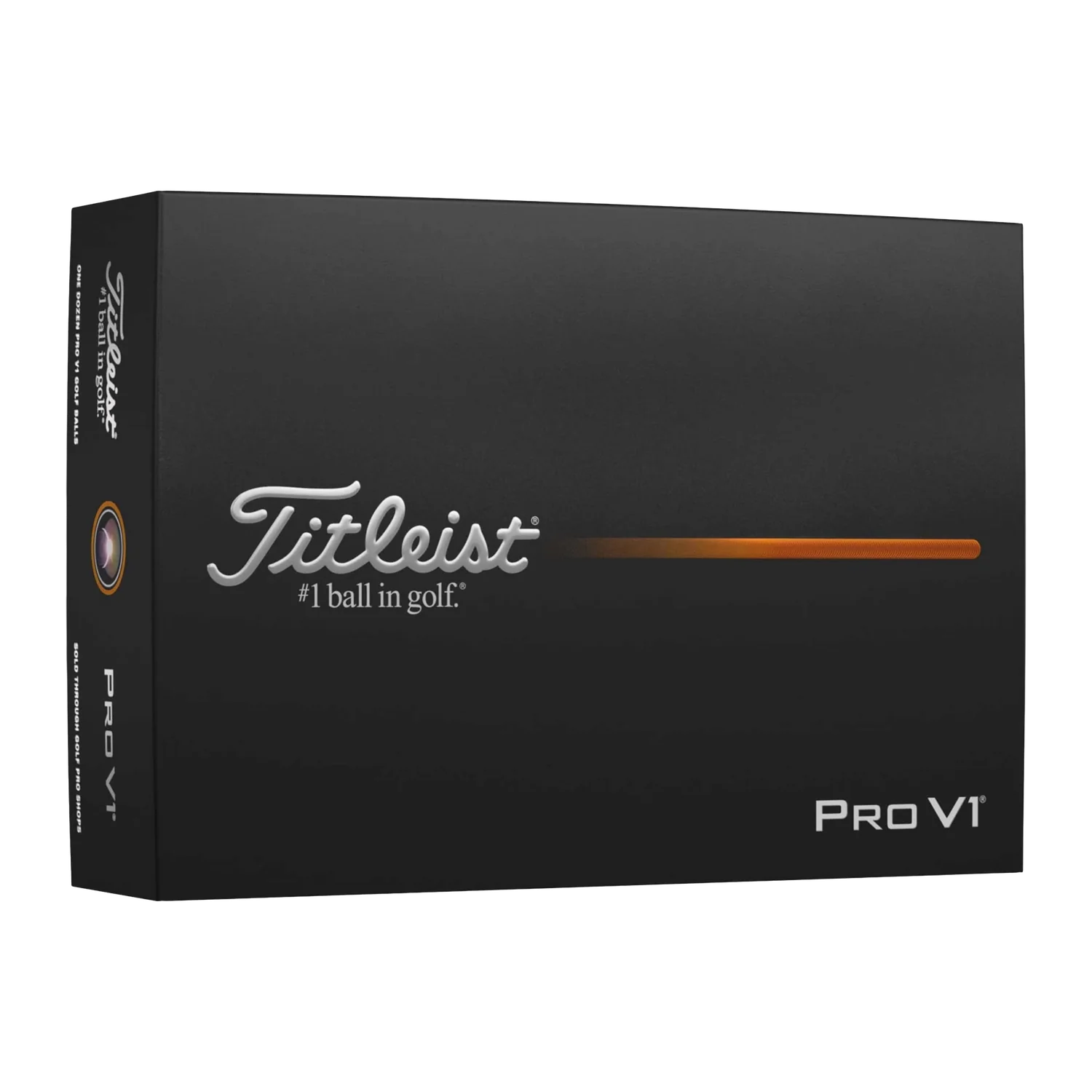 Titleist Pro V1 Titleist Pro V1 | £3.58 | £42.99 | 181.5 yds | 236.4 yds | 279.6 yds | Go to shop → |
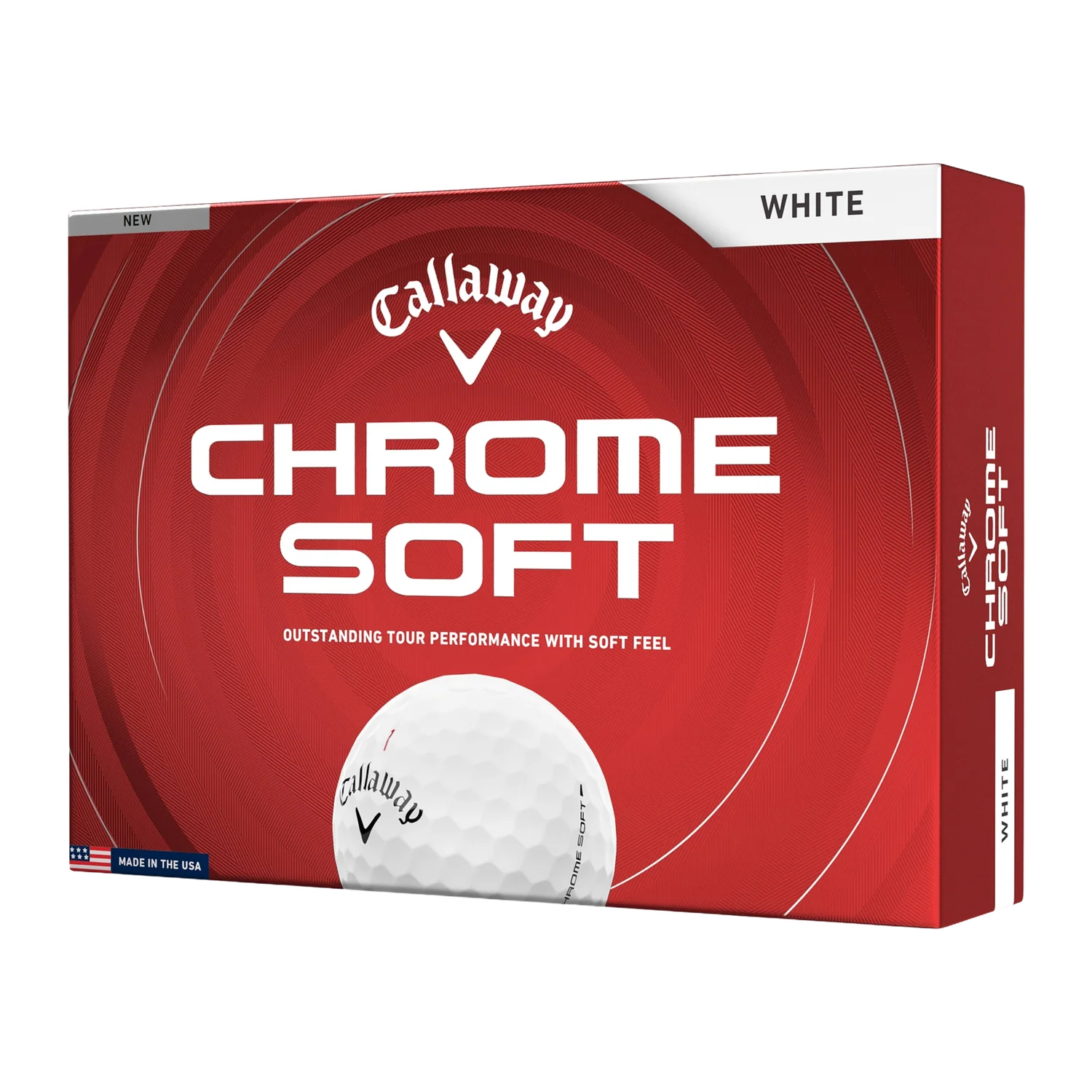 Callaway Chrome Soft Callaway Chrome Soft | £3.21 | £38.49 | 181.4 yds | 234.4 yds | 277.7 yds | Go to shop → |
The Pro V1 gets its edge from carry. The Chrome Soft rolls out a little more after landing: 0.3 yards at 81 mph, 0.5 yards at 96 mph and 0.4 yards at 112 mph. The separate carry and roll figures show where the total-distance difference comes from.
The decimals are the model output and serve to compare both golf balls under the same conditions. Your own distance also depends on your strike. Weather and turf play a part too.
What does driver spin tell you about ball flight?
In the model the Chrome Soft spins less in total at all three speeds. The difference is largest at 81 mph and shrinks as swing speed rises.
| Golf ball | 81 mph | 96 mph | 112 mph |
|---|---|---|---|
| Titleist Pro V1 | 3125.0 rpm | 2696.4 rpm | 2588.7 rpm |
| Callaway Chrome Soft | 2939.0 rpm | 2609.6 rpm | 2572.2 rpm |
Less total spin can, at an unchanged spin axis, limit how much a ball curves. The table compares total spin and shows the difference is clearer at 81 mph than at 112 mph. To judge direction, combine these values with spin-axis and side-deviation measurements.
Which ball performs better with a 7-iron?
At a swing speed of 78 mph the Pro V1 has a ball speed of 103.7 mph in the model versus 103.3 mph for the Chrome Soft. The Pro V1 carries 138.1 yards and the Chrome Soft 134.6 yards, a difference of 3.5 yards. The spin difference is 271.9 rpm in the Pro V1's favour.
| Golf ball | Ball speed | Carry | Spin | Stopping score | Workability |
|---|---|---|---|---|---|
| Titleist Pro V1 | 103.7 mph | 138.1 yds | 6116.9 rpm | 77 | 82 |
| Callaway Chrome Soft | 103.3 mph | 134.6 yds | 5845.0 rpm | 69 | 76 |
If you want more spin and stopping power into the green with an iron, the Pro V1 fits better in this calculation. In this scenario the Chrome Soft reaches a higher apex: 27.4 yards versus 25.3 yards for the Pro V1. The stopping score is 69 for the Chrome Soft and 77 for the Pro V1.
How do the Pro V1 and Chrome Soft differ with a wedge?
With the wedge the figures are close. The Pro V1 spins 5689.0 rpm and the Chrome Soft 5593.0 rpm, a difference of 96 rpm. Carry and apex are nearly equal as well.
| Golf ball | Wedge spin | Carry | Apex | Spin score | Putter score |
|---|---|---|---|---|---|
| Titleist Pro V1 | 5689.0 rpm | 36.7 yds | 5.8 yds | 89 | 75 |
| Callaway Chrome Soft | 5593.0 rpm | 36.4 yds | 5.9 yds | 86 | 75 |
So the Pro V1 has a small edge in wedge spin. Both golf balls get the same putter score of 75 in the model.
Does the Chrome Soft feel softer than the Pro V1?
The model feel score off the driver is 75 for both golf balls. The putter score is equal too. The compression values do differ: 92 for the Pro V1 and 77 for the Chrome Soft. Compression describes how much a ball deforms under load. A lower value often goes with a softer feel. The cover and the club used also influence what you feel at impact.
Based on the compression gap it is reasonable that the Chrome Soft feels relatively softer and the Pro V1 a bit firmer. That remains a careful inference from the compression values. In the model both golf balls score 75 for feel. How clearly you notice that expected difference is personal.
Which player does the Pro V1 suit best?
In this comparison the Pro V1 suits a golfer who:
- wants a small but consistent edge in carry and total driver distance;
- wants more spin and stopping power with a 7-iron;
- values a small edge in wedge spin around the green;
- expects a relatively firmer feel from the higher compression.
The clearest advantage of the Pro V1 is in the 7-iron calculation. The other differences are smaller; the driver distance advantage is at most 1.9 yards across the three calculations.
Which player does the Chrome Soft suit best?
In this comparison the Chrome Soft suits a golfer who:
- values less total driver spin over the Pro V1's small distance edge;
- wants a little more roll-out after a drive;
- expects a relatively softer feel from the lower compression.
The lower total driver spin is one part of ball flight. To establish whether the Chrome Soft also flies straighter, spin-axis and side-deviation measurements are needed. Anyone mainly wanting to reduce a slice therefore needs a full ball-flight measurement.
How do you make the final choice?
In this model the Pro V1 has more carry off the driver and more spin with the 7-iron and the wedge. The Chrome Soft sets itself apart with less total driver spin and a little more roll-out. Its lower compression also points to a softer feel, though that stays personal. So decide which difference weighs most for your game.
Play a few rounds with the same ball. With your irons, watch the carry, and on pitches and chips see how the ball reacts after landing. When putting you will naturally notice which feel you prefer. That way you can check whether you also feel the model differences in your own shots.
OneGolfBall compares your playing profile with the properties of different golf balls. For a one-off price of £8.99 you get a personal recommendation of golf balls that suit your game.
Keep reading
Ready to find your ball?
Answer a few quick questions and get the ball that fits your swing.